To carry out Google-related development and client server deployment in the German market, low latency, compliance and scalability need to be taken into consideration. This article focuses on the "Best Practice German Google Development Client Server Performance Tuning and Scaling Strategy", provides technical points and implementation directions for localization needs, and helps the engineering team optimize user experience and maintainability in compliance with GDPR and local network conditions.
Establish performance baseline and demand analysis
Before performing performance tuning, it is crucial to conduct baseline collection and requirements analysis. By measuring the response time, throughput and error rate under real traffic or simulated traffic in the German region, and clarifying the SLA and critical path, we can formulate targeted tuning plans to avoid resource waste or regression caused by blind optimization.
Refined monitoring and observability strategy
Deploy monitoring and distributed tracing covering applications, databases, networks, and infrastructure to ensure observability. Collecting localized indicators, logs and tracking data and configuring alarms can help the team quickly locate bottlenecks and output reproducible diagnostic information when German node performance degrades, supporting the continuous optimization process.
Caching strategy and content distribution optimization
Using multiple layers of caching (in-app caching, reverse proxy, CDN) can significantly reduce origin load and improve German user experience. Set reasonable TTLs for static resources and cacheable APIs, and deploy edge nodes in Germany or nearby regions to reduce cross-border delays. At the same time, consider the trade-off between cache invalidation and consistency strategies.
Database tuning and separation of reading and writing
For write-intensive or read-intensive scenarios, using read-write separation, index optimization, and partitioning strategies can improve performance. Evaluate the latency and consistency requirements for deploying a master-slave or multi-master architecture in Germany, and combine asynchronous replication and latency compensation mechanisms to ensure both availability and data integrity.
Load balancing and automatic scaling (Autoscaling)
Capacity can be automatically adjusted when traffic fluctuates using auto-scaling policies based on request rate, CPU, or custom business metrics. Combined with regional load balancing and health checks, it ensures that traffic enters the nearest healthy German nodes first, reducing cross-region costs and improving availability and response speed.
Failure recovery and capacity plan
It is critical to have failure recovery plans and capacity plans across Availability Zones. By practicing failover, traffic splitting and rollback processes, the disaster recovery capability of the service in the event of a failure in Germany or adjacent regions is verified to ensure that business interruption is minimized and business continuity requirements are met.
Safety compliance and cost optimization in parallel
Operating in Germany requires considering both compliance requirements such as GDPR and cost efficiency. Adopt the least privilege, encrypted transmission and data sovereignty strategies, and control costs through reasonable instance types, reservation and elasticity strategies, and on-demand expansion and contraction to achieve a balance between security and economy.
Summary and implementation suggestions
For the "Best Practice German Google Development Client Server Performance Tuning and Scaling Strategy", it is recommended to start from five dimensions: baseline measurement, observability, caching and CDN, database and load balancing, automatic expansion and disaster recovery. Verify improvement feedback in stages, and continuously optimize based on local compliance and network characteristics to achieve a stable, scalable and cost-controllable German user experience.

- Latest articles
- Popular tags
-
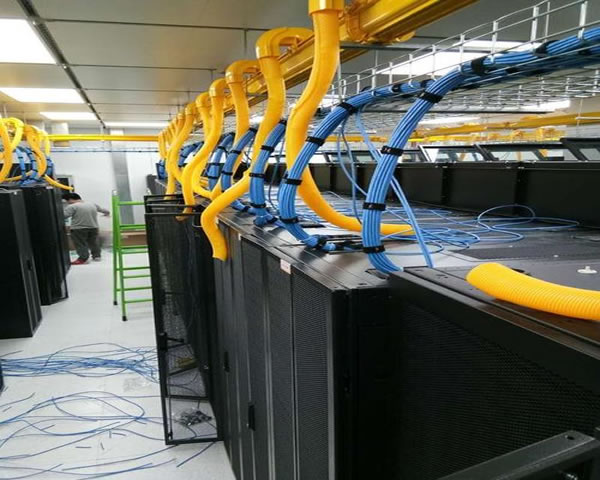
Evaluation Of Download Speed And Stability Of German Volkswagen Server
evaluate the download speed and stability of the german volkswagen server and analyze its performance in various application scenarios. -

Discuss The Advantages, Disadvantages And Usage Experience Of German Servers
in-depth discussion of the advantages, disadvantages and usage experience of german servers to help users make informed decisions. -
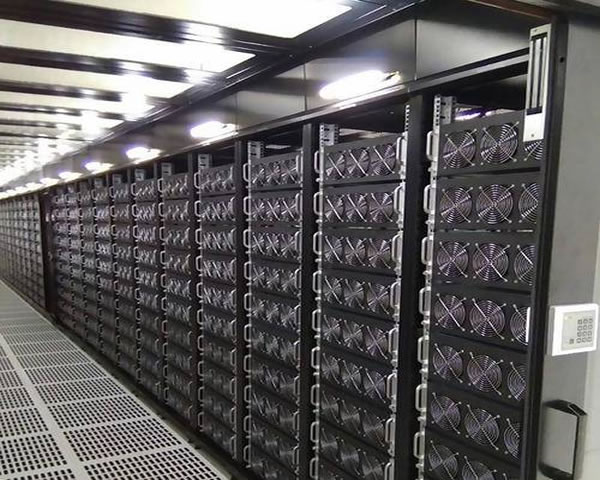
Professional Procedures And Suggestions For Network Cabling Installation In German Computer Rooms
this article details the professional processes and suggestions for network cabling installation in german computer rooms to help you better understand the key steps of network cabling.